
Meridian Simulated Banking Platform
A simulated consumer bank with a public website, a customer portal, an internal operations console, and a backend whose ledger derives every balance from append-only entries. The customer site and the operations console are both live as public demos.
About this project
Introduction
Up until this point, all of the projects that I pursued with Claude Code were relatively small prototypes. Many of them were one-shots, and others iterated over a few steps to fix up some bugs or implement my preferences. I wanted this next project to reveal how far one engineer can push the current frontier AI development tools. Because of this, I deliberately chose something too large to treat as a toy example: a simulated banking platform with multiple interfaces, workflows, and interacting systems.
Approach
I started with a design planning session within ChatGPT. Over the course of discussion, exploration, and interviewing, the plan for this entire experiment was composed. The plan included splitting up the implementation of a simulated banking platform into multiple discrete steps. Each step would thoroughly implement a certain subset of features and test them end-to-end before preparing the next step. In between steps, I would have an opportunity to test the current iteration of the application, provide feedback on how it was going, and report any bugs I found. After 10 of these steps, the first major release (version 1.0) would be complete.
I used Claude Code to implement each new version of this application. The prompt for each next session would be composed by the previous Claude Code session, and it would include a section for me to add my feedback to the next prompt. Additionally, it would provide me with specific testing instructions pointing me to the new features available in this version so that I could test them to my satisfaction.
Results
Overall, this experiment was a glowing success. The resulting banking application and the capabilities surrounding it exceeded my expectations. Furthermore, the process of creating it was very straightforward and easy to accomplish. I never felt like I had to perform too much work myself, and I feel as though the product I received is closely aligned with what I had envisioned when I started.
There was one instance, in version 0.6.0, where I found a bug that took Claude Code two iterations to fully fix. However, apart from that, there were no unexpected speed bumps in this process.
The results of this test go beyond just the resulting banking application. I could have chosen anything for this project; a banking application was just a good, complicated system to demo, as many people are already familiar with what a banking application should do and what features should be present. The most important finding from this experiment is that this process was successful. The waterfall-type approach of building complex software with AI tools was definitely effective. In just under a regular workweek, I went from idea to operational prototype. I see no reason why this process could not reproduce all kinds of complicated software.
Screenshots
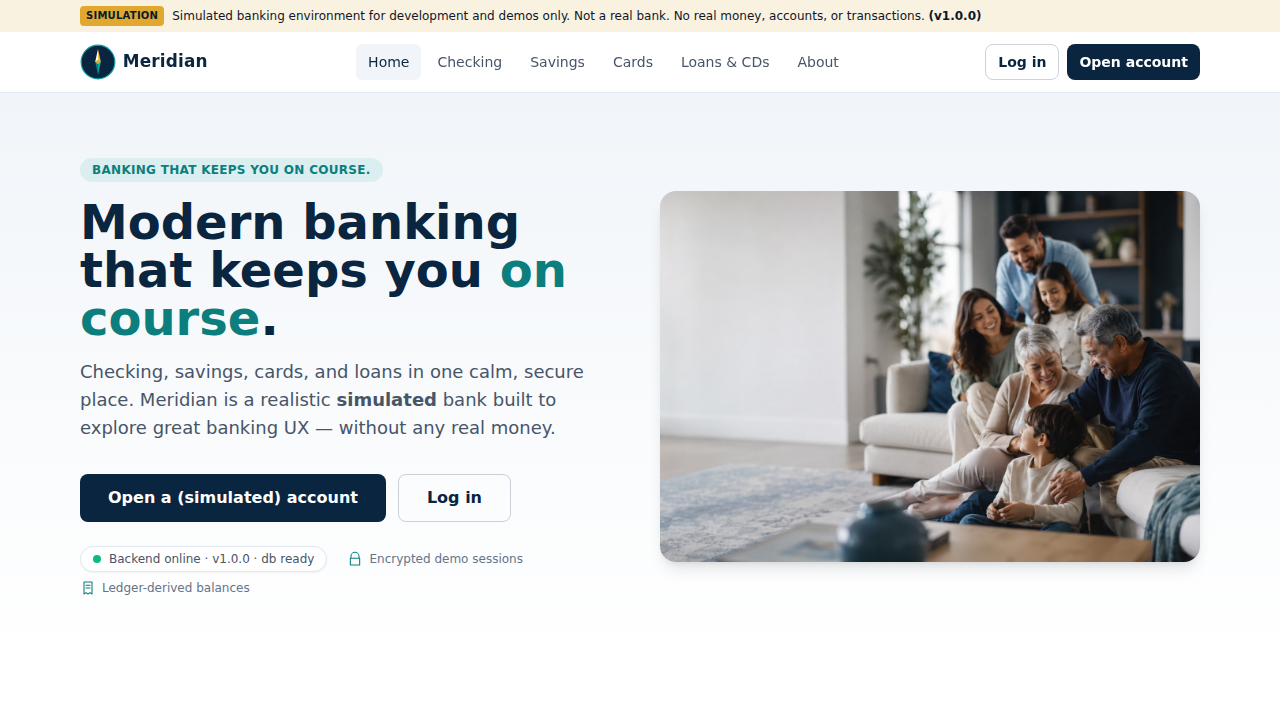 (view full size)
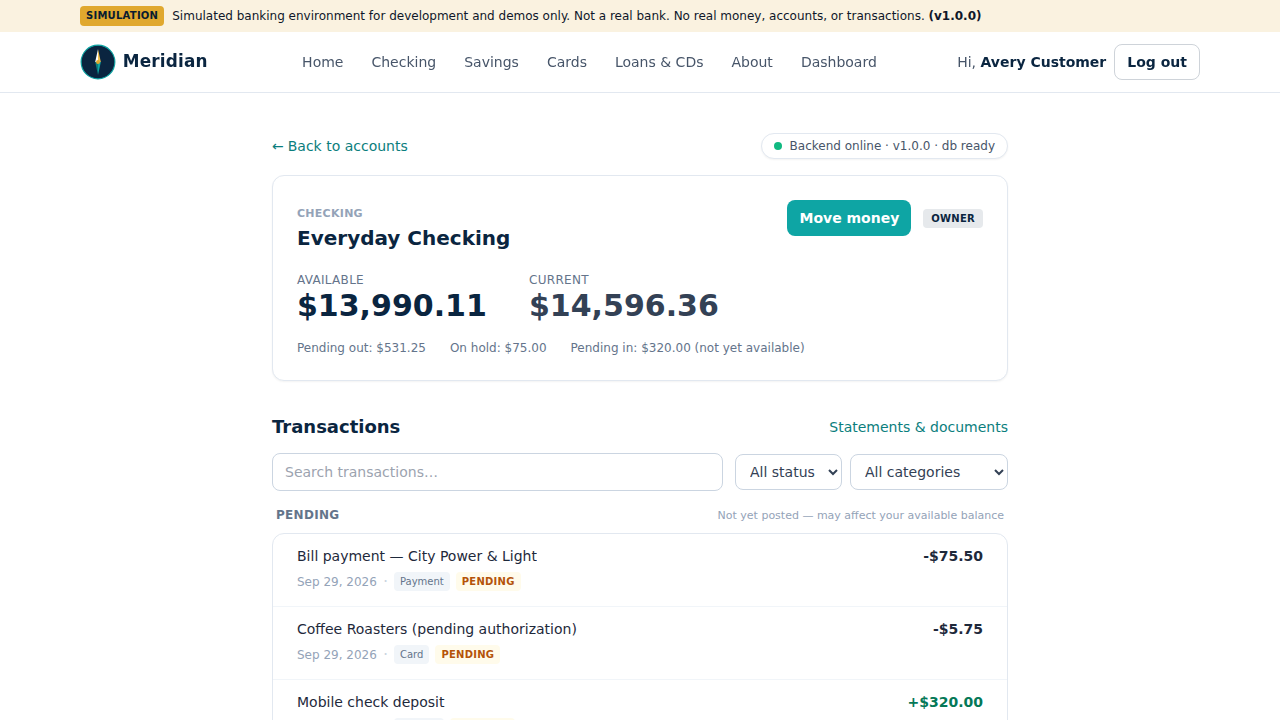 (view full size)
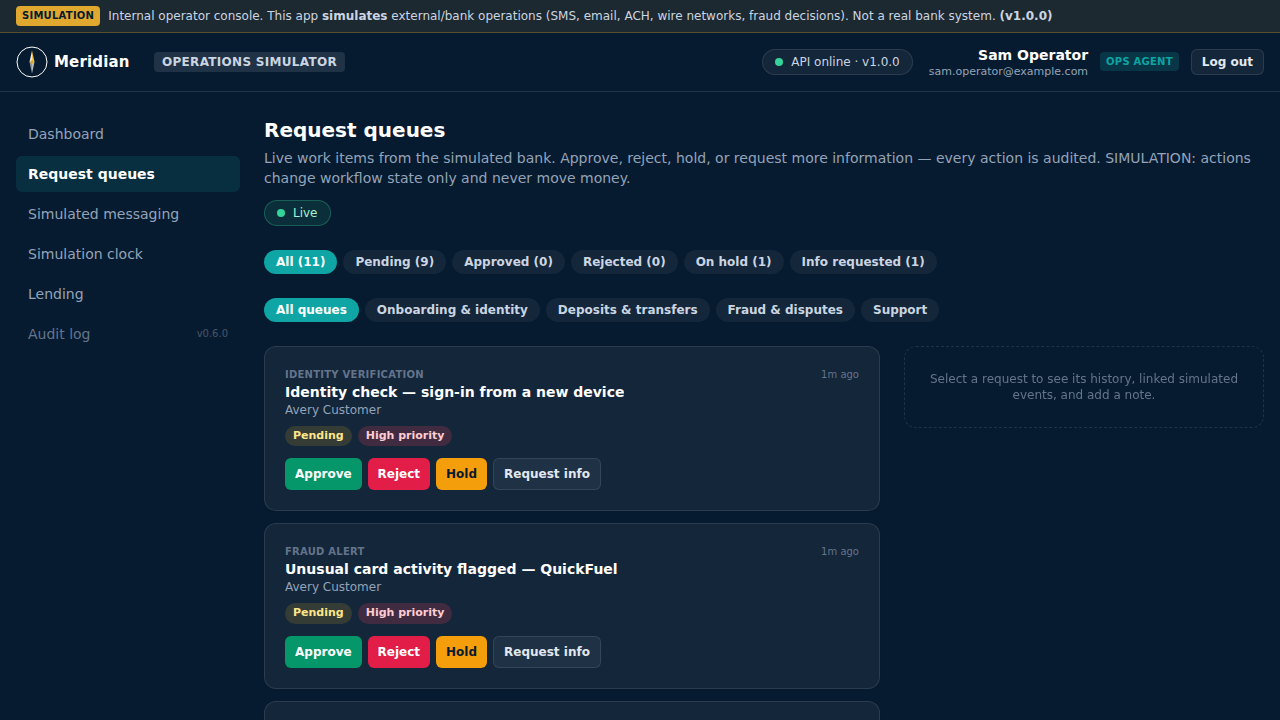 (view full size)